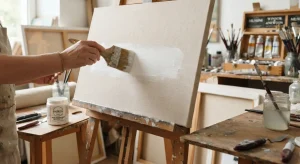
Acrylic paints are among the favourites of professional artists and amateurs alike. They dry fairly quickly, as they’re thinned with ordinary water. Technically, it’s recommended to thin them even with distilled water, supposedly so as not to spoil the quality of the acrylic or change the colour, but in practice I think you can skip that and use ordinary tap water.
Why do you need a thinner for acrylic paints?
Like oils, acrylic paints are sold in tubes or jars with tight-fitting lids. This limits the paint’s contact with air, so it doesn’t dry out. But when you decide to paint and squeeze some onto the palette, you’ll notice how thick it is. Unless you’re painting with a palette knife, where thickness is what you want, you’ll have to thin the paint. This lets you create smooth transitions and paint in glazes.

How quickly do acrylic paints dry?
Diluted acrylic usually dries a little faster than water, as the paint contains volatile substances that speed up drying. Depending on the thickness of the layer, acrylic dries in 10 to 60 minutes. Of course, you can paint a small picture in that time, but what if you can’t keep up? Paint dries on the palette, and if you don’t clean it off in time, it will stick to it almost for good.
How to slow down acrylic drying
There are several ways to slow down the drying of acrylic paints:

- Add a drop of water
After squeezing the paints onto the palette, add a single drop of water to each and mix. This way there’s more water in the paint and it won’t evaporate as quickly. It makes the paint more fluid and stops it from drying fast, but the paint will be more diluted, so the layers become even more transparent. Be careful not to overdo the water, or the paints will start running right on the palette.

- A spray bottle.
With this gardener’s tool you can mist the paints on your palette. The fine droplets don’t dilute the paint much and often stay on the surface, preventing it from skinning over.

- A stay-wet palette.
This method is also simple: lay napkins or paper towels on the palette and wet them or mist them with a spray bottle so they’re damp but not dripping. Squeeze the acrylic onto them; it draws water from the paper and doesn’t dry as fast. The paints may start to spread on the paper or even mix, so be careful and squeeze them out at a distance from each other.

- Acrylic drying retarder
Retarders are sold in art shops, usually in the same kind of tubes as the paints. Add up to 20% retarder to the paint (the exact proportions are usually given in the instructions) and mix thoroughly — this can almost double the drying time! Retarders come as pastes and gels, and note that many of them have a matte or gloss effect, which will carry over to the dried paint.
How to speed up acrylic drying on canvas or paper
For me, the drying speed of acrylic is perfectly comfortable: I squeeze out a small amount of paint and manage to get it onto the canvas before it dries on the palette. And on the canvas I apply layers thin enough to be dry by the time I come back to them.
What if you need to speed up drying? Some people add 10–20% alcohol to the paint or to the water they thin it with. As you know, alcohol evaporates faster than pure water, so the paint dries faster. This method is perfectly valid — you just need to be careful with the proportions. Alcohol (vodka) can spoil the quality and density of the pigment. Another downside of this thinner is that you’ll have to breathe the fumes, and if you paint on paper, alcohol damages it more than water does.
The first thing that affects the drying speed of acrylic paints is temperature and, for example, airflow — just like with water. Water evaporates faster at higher temperatures, and if the vapour is blown away, drying is even quicker. That’s basic physics, taught back in year 5 or 6 🙂
Does that ring a bell? If you thin acrylics with water, you can speed up drying with an ordinary household hairdryer — something watercolourists often do when working on large paintings. The hairdryer blows a fast stream of warm air that makes the water evaporate many times faster.

I think few people ever need to speed up acrylic drying, and if you do, it’s better not to experiment with thinners — just use a hairdryer or a fan 😉
But if you need to slow down acrylic drying while painting, you can do it either on the palette using water, or by adding special acrylic retarders to the paint. They handle the job perfectly.
Video of painting with acrylics on canvas:
My acrylic paintings:
-

Acrylic painting 30×40 “Dachshund of Kiba”
1200,00 ₴ -
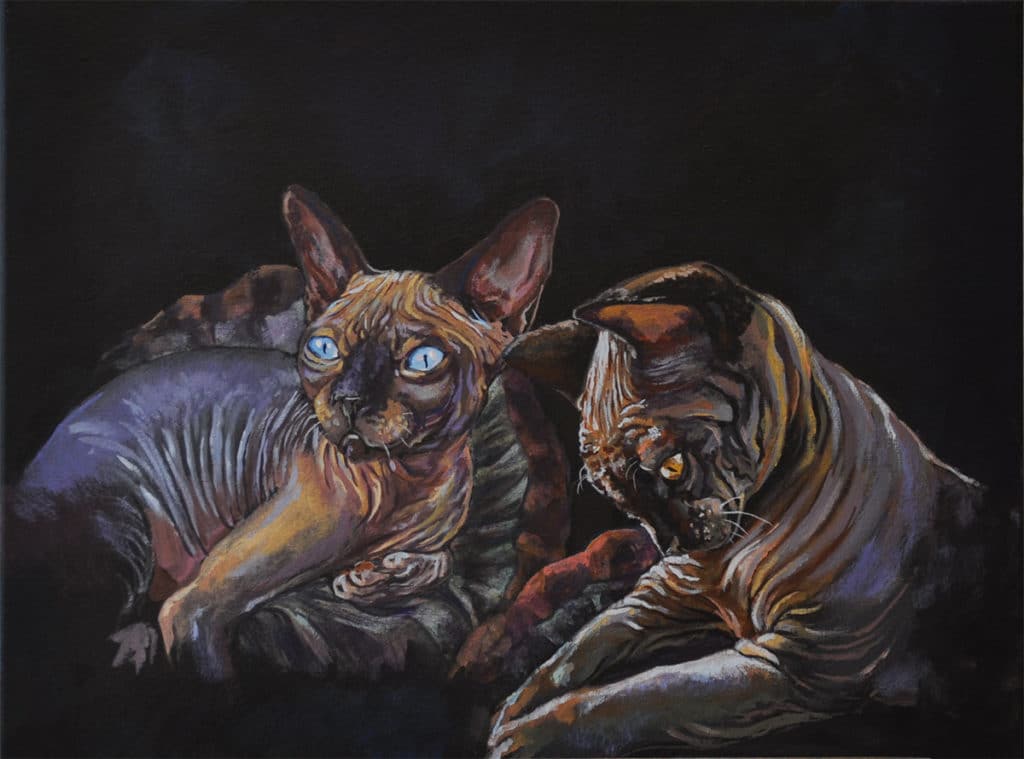
Acrylic painting 30×40 “Cats sphinxes”
1700,00 ₴