Watercolors are fascinating paints for both children and adults. But do you know these very interesting facts about these transparent and light paints?
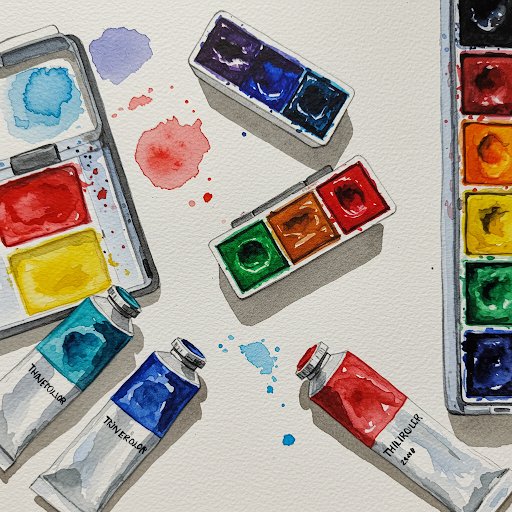
- Transparency: Watercolor is known for its transparency, which allows for the creation of light and airy effects.
- Water Solubility: Watercolors are diluted with water, allowing you to control color saturation.
- “Wet-on-Wet” Effect: This technique allows for the creation of soft color transitions and blurred outlines.
- Layering: Watercolor allows for the layering of colors, which adds depth and volume to a painting.
- Use of White Paper: White paper plays a crucial role in watercolor, as it creates light shades and highlights.
- Correcting Mistakes: Correcting mistakes in watercolor is difficult but possible using a sponge or a brush with water.
- Fast Drying: Watercolor dries quickly, requiring fast work and planning.
- Variety of Techniques: Watercolor allows for various techniques, such as “dry brush,” “glazing,” and “granulation.”
- Use of Salt: Salt can create interesting textural effects on a watercolor painting.
- Use of Masking Fluid: Masking fluid allows you to protect certain areas of the paper from the paint.
- Use of a Sponge: A sponge can be used to create textural effects and blend colors.
- Use of Natural Hair Brushes: Brushes made of natural hair hold water better and allow for soft strokes.
- Use of Watercolor Paper: Watercolor paper has a special texture and weight that allows the paint to be absorbed better.
- Use of Watercolor Pencils: Watercolor pencils allow for detailed drawings that can later be blended with water.
- Use of Watercolor Inks: Watercolor inks allow for the creation of bright and saturated colors.
Comparison of Watercolors with Other Paints: Watercolor vs. Gouache
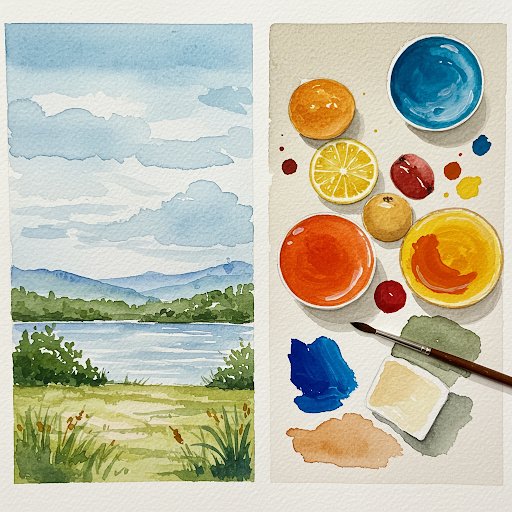
Watercolor – transparent, gouache – matte and opaque. Watercolor allows for the creation of light and airy effects, while gouache provides more dense and saturated colors.
Watercolor vs. Acrylic
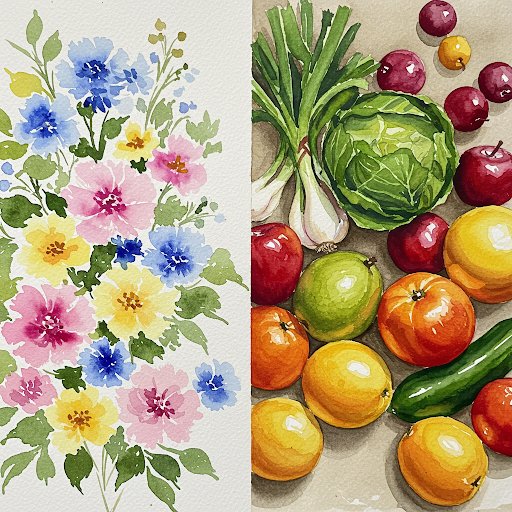
- Watercolor is water-soluble, whereas acrylic is water-resistant once dry.
- Watercolor allows for soft color transitions, while acrylic produces more distinct and saturated colors.
Watercolor vs. Oil Paints
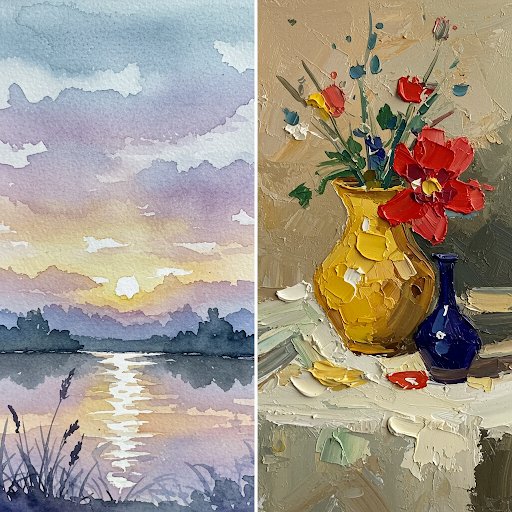
- Watercolor is fast-drying, while oil is slow-drying.
- Watercolor allows for the creation of light and airy effects, while oil provides more textured and voluminous brushstrokes (it is possible to replicate watercolor techniques with oil, but it takes a veeeeery long time).


