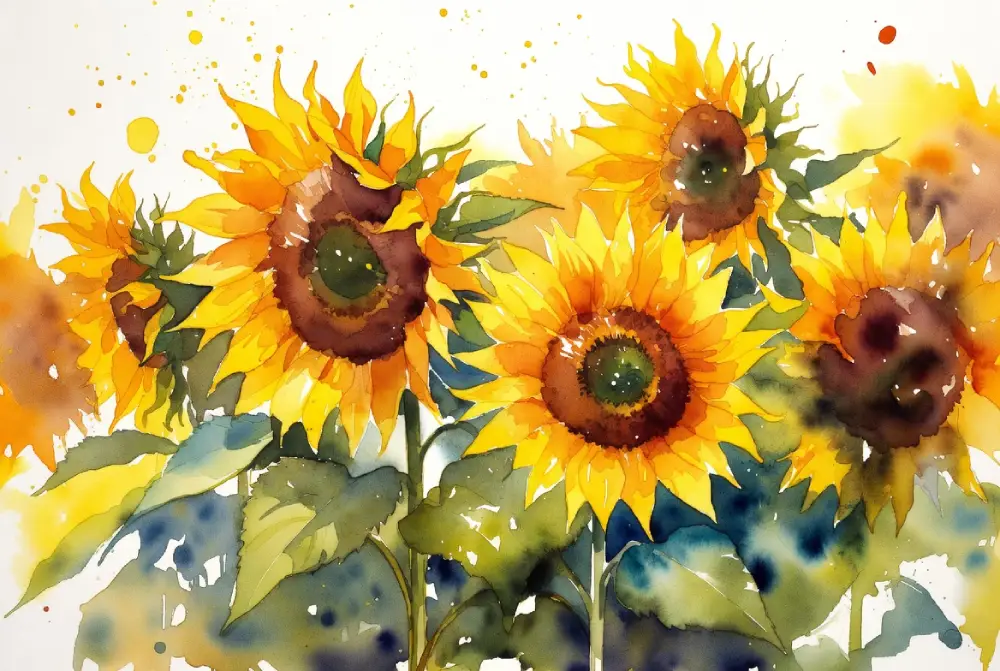
Imagine: a drop of water touches the paper – and suddenly the sky begins to breathe, a light mist rises over the lake, or a delicate blush appears on the cheeks of a portrait. This is not magic. This is watercolor. A paint that is born from water, lives because of it, and disappears if there is too much water. It is simultaneously the simplest and the most complex medium in the world of painting.
Many people think watercolor is “paint for children.” But real masters know: it demands the highest skill, because a mistake can almost never be corrected, and every brushstroke remains forever. Let’s dive into its secrets deeper than usual textbooks do.
Where Watercolor Comes From: A Journey Through Millennia
Watercolor paints are among the oldest in the world. Their ancestors appeared already in Paleolithic cave drawings: people mixed charcoal, clay, and minerals with water (and sometimes saliva). In Ancient Egypt, water-based paints decorated papyri and tomb walls. The true flourishing came in China as early as the 2nd century AD – they painted not only on paper but also on silk and wood.
In Europe, watercolor “exploded” during the Renaissance. Albrecht Dürer in the 15th century created incredibly detailed botanical and landscape watercolors that still amaze with their precision. The golden age of English watercolor (18th–19th centuries) gave the world the names of Turner, Constable, and Girtin. It was then, in 1781, that the Reeves brothers invented the first solid “cakes” of watercolor – convenient tiles that no longer had to be ground by hand every time.
Today we use the same principles as the old masters, but with modern pigments.
Why watercolor is so special: science in every drop
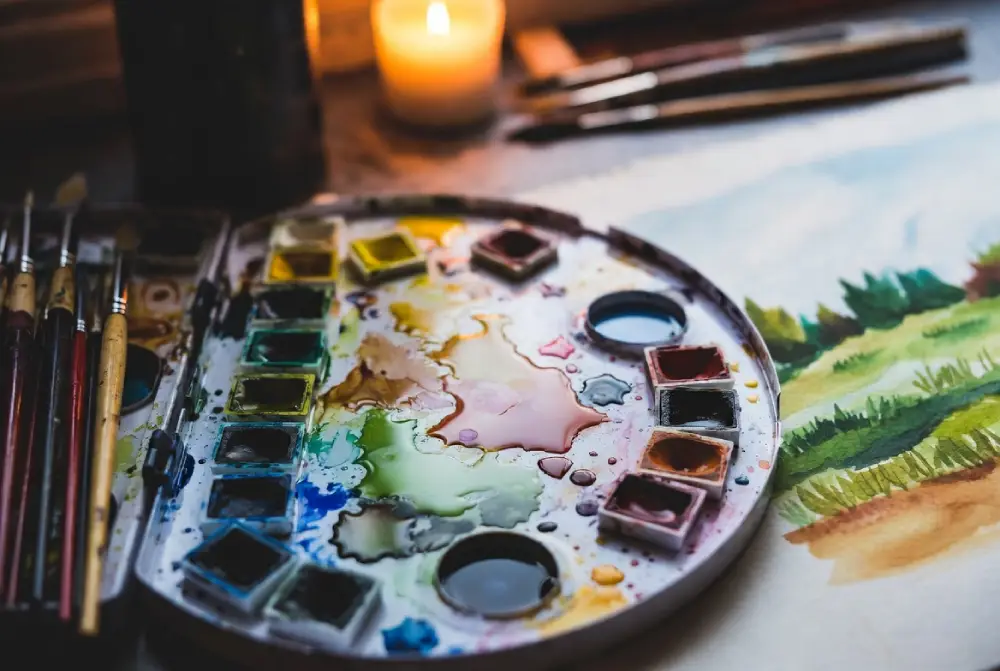
The main secret of watercolor is transparency. Unlike gouache or acrylic, it does not completely cover the paper. The pigment lies in a thin layer, and the white color of the paper “glows” through the paint, creating incredible lightness and freshness.
The composition of watercolor is brilliantly simple:
- Pigments (mineral, vegetable, or synthetic);
- Gum arabic (acacia resin) – the binder that holds the pigment and gives fluidity;
- Sometimes honey, glycerin, or sugar for plasticity.
It is thanks to gum arabic that the paint remains soluble in water even after drying. That’s why watercolor can be “revived” with a wet brush even after years.
12 Magical Properties and Techniques That Make Watercolor Unique
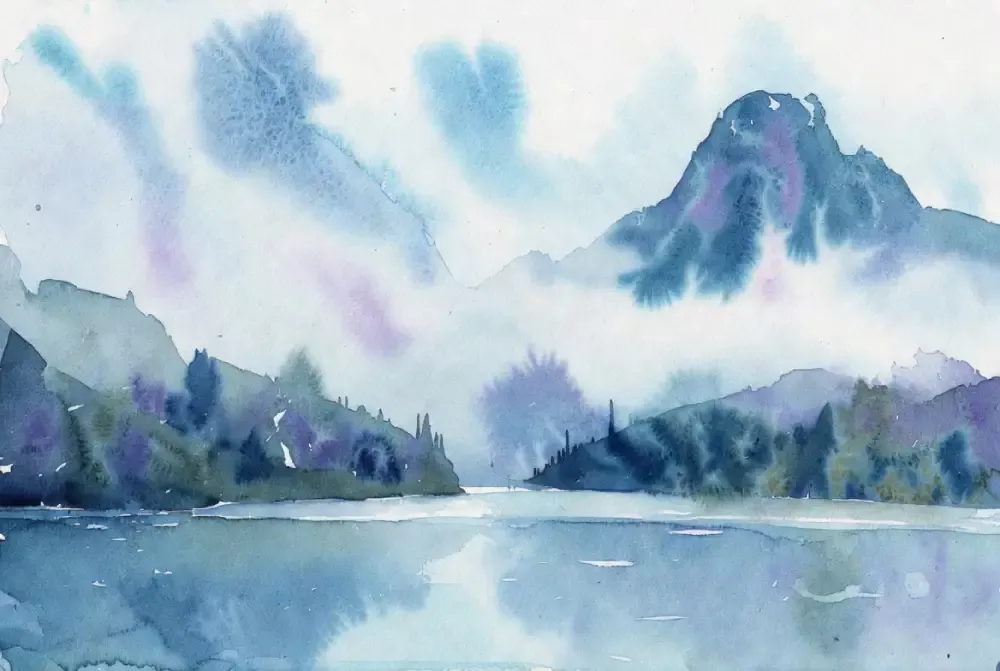
- Transparency and layering You can apply dozens of layers, and each new one does not kill the previous one, but only enriches the color. It’s like playing with light in crystal.
- Wet-on-wet technique The paper is wet – the paint flows, mixes, creates clouds, mist, and soft transitions. Perfect for skies, water, and emotional portraits.
- Granulation – natural “sand” in the paint Some pigments (ultramarine, cobalt, earth tones) have larger particles that settle unevenly on the paper. You get a grainy, “living” effect – as if the painting is breathing. Especially beautiful in rock landscapes or old walls.
- Salt effect Sprinkle salt on wet paint and you’ll get a starry sky, snow, or leaf texture. The crystals absorb water and leave amazing patterns.
- Masking fluid (frisket) It protects white areas of the paper. After the paint dries, it is removed – and shining highlights appear that cannot be painted with white paint.
- Dry brush With an almost dry brush on textured paper you get the texture of wood, animal fur, or stone.
- Fast drying This is both a curse and a blessing. You have to think ahead because correcting a mistake is difficult. But it forces the artist to be bold and decisive.
- The role of white paper In watercolor there is no “white paint” in the classical sense. Light is created by the paper itself. That’s why the choice of paper (cold or hot press, density 300 g/m² and higher) is half the success.
Watercolor vs Other Paints: honest comparison
- Watercolor vs Gouache: watercolor is transparent and airy, gouache is dense, matte, and covers well. Gouache forgives mistakes, watercolor does not.
- Watercolor vs Acrylic: acrylic becomes waterproof and bright after drying, but “dead.” Watercolor is always alive and moving.
- Watercolor vs Oil: oil allows you to work for months, watercolor – in hours. But watercolor conveys the ephemerality of the moment better than anything else.
Modern Tricks Few People Know About
- Watercolor in tubes – for large formats and generous washes.
- Watercolor pencils – detailing + the ability to blur with water.
- Liquid watercolor (Ecoline) – super bright, ideal for illustrations and calligraphy.
- Pure gum arabic can be added yourself to make the paint even more fluid.
Some modern brands offer entire series of super-granulating colors – for those who want the painting to “come alive” with texture.
Why Watercolor Captivates You Once and Forever?
Because it teaches you to let go of control. You cannot fully control the water – and that is its beauty. One unsuccessful stroke can become the most interesting element of the painting. It develops observation, reaction speed, and courage.
If you are just starting – don’t be afraid to “ruin” a sheet. Every failure is a lesson. And one day when you see a sunrise or a tender gaze appear on the paper by itself, you will understand: watercolor is not just paint. It is a small miracle that happens between water, pigment, and your breath.
Would you like to try? Take quality paper, a couple of good pans, clean water and… let the water do its job. Perhaps today your best watercolor will be born.
What is your favorite watercolor secret? Write in the comments – let’s share experience!


